NEWS

Test text
Test text
I’m Still Playing.

The three newest uploads from the channel. Press play to watch right here.
ICARUS
VALHEIM 1.0
PERMAFROST
A home for channel news, series updates and the plans behind each adventure.
Test text
Test text
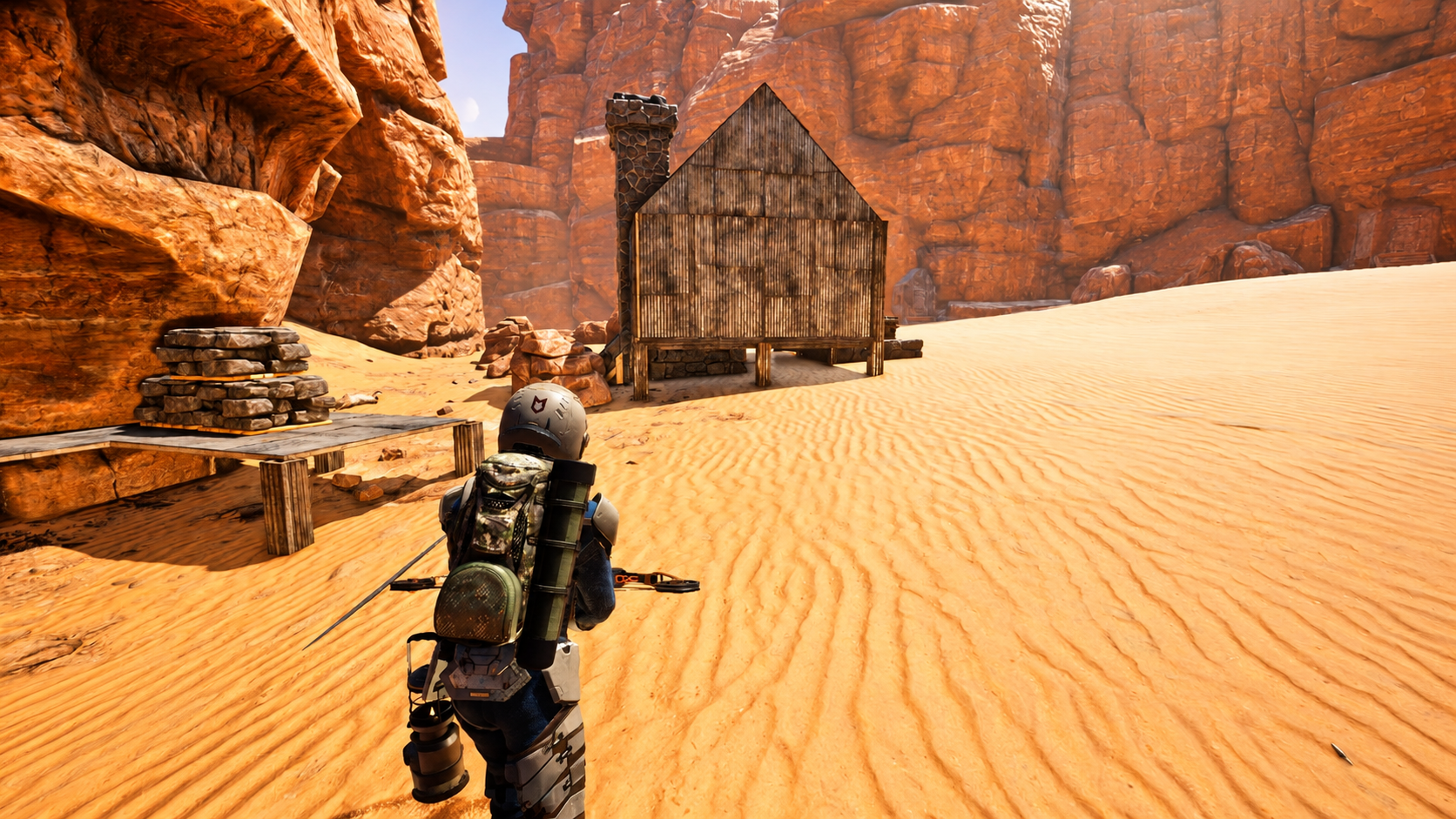
This week brings a major overhaul to fishing on Icarus, giving you more ways to make use of your catches...
Welcome to Week 254.
This week brings a major overhaul to fishing on Icarus, giving you more ways to make use of your catches. We’re introducing a range of new fish-based recipes, each with unique bonuses, alongside alternative crafting paths for several essential items.
We’ve also overhauled the Fishing UI, bringing it in line with the standard UI across Icarus. On top of this, you can now increase your Comfort level by displaying higher-quality fish in aquariums and on fish mounts, giving you another reason to seek out the best catches.
Finally, we’re delivering a highly requested Great Hunts feature, giving you the option to disable creature and den spawns once the campaign has been completed. This makes the maps safer to explore after the hunt is over.
We also take a quick look at next weeks patch - Rifle Turrets.
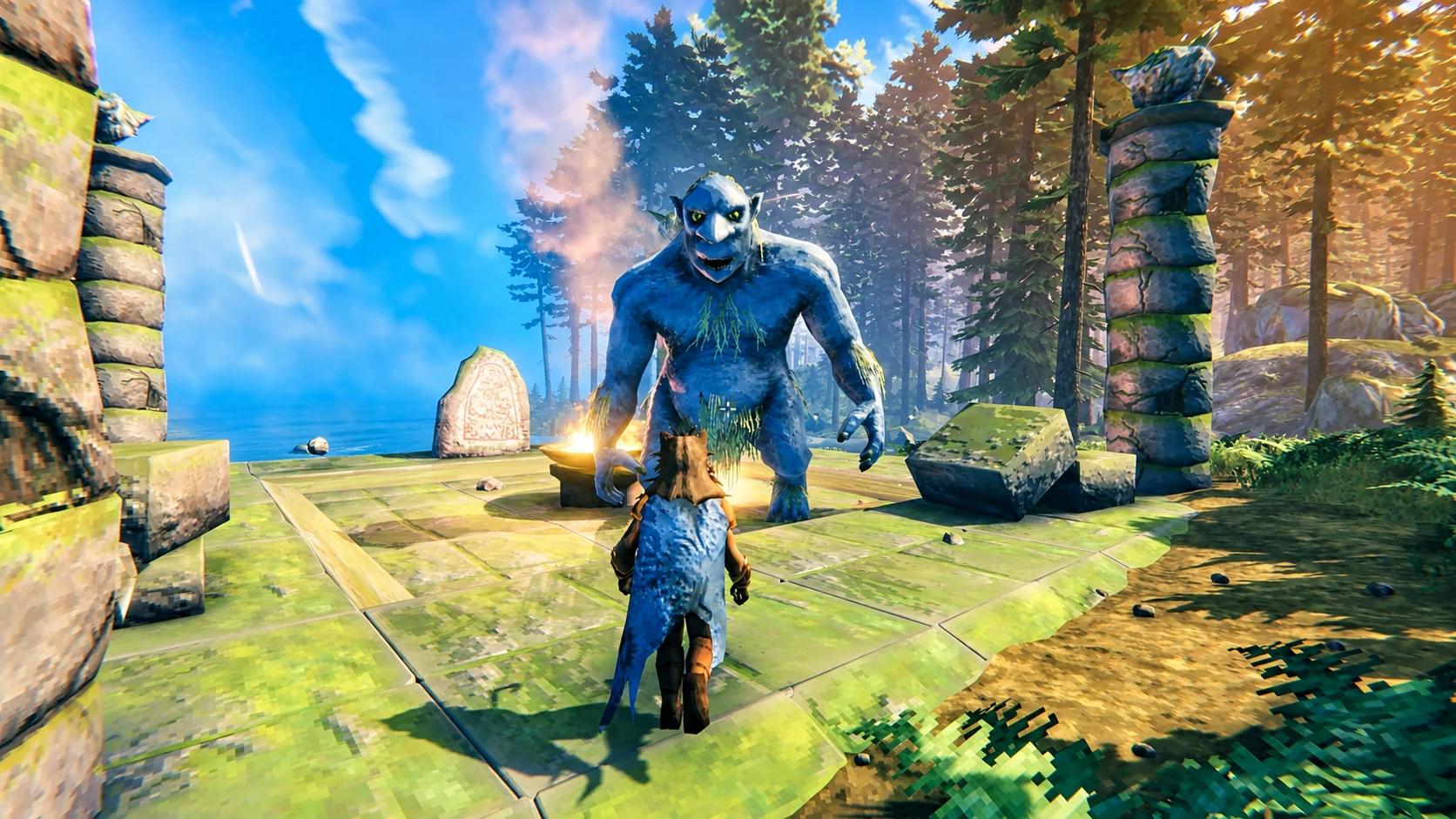
The Valheim 1.0 adventure is underway. I’m exploring the world, gathering resources and building a home one step at a time.
This space will share notes from the journey, including new discoveries, builds and memorable moments along the way.
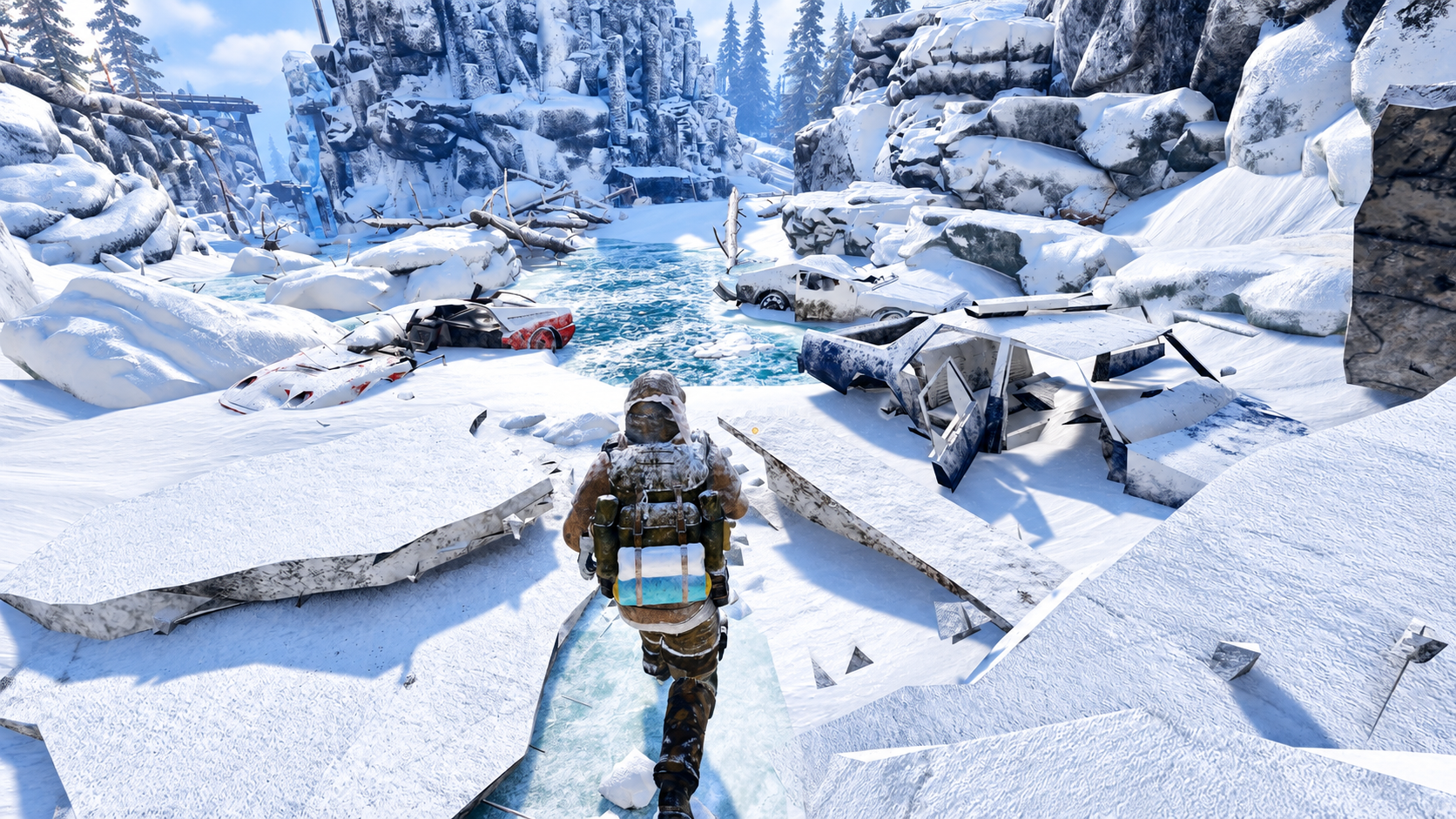
A new survival challenge means learning the basics, finding shelter and getting ready for the conditions ahead. In this world, the cold is part of every decision.

A new survival challenge means learning the basics, finding shelter and getting ready for the conditions ahead. In this world, the cold is part of every decision.
A new survival challenge means learning the basics, finding shelter and getting ready for the conditions ahead. In this world, the cold is part of every decision.
Enshrouded 1.0 is coming to the channel. Join me from the first steps as I explore its world, take on new challenges and see where the journey leads.
Find it on YouTubeA new survival journey begins. Follow along as I explore the world, face its challenges and share my progress in Plains of Pain.
Follow the journeyPermafrost is a story-driven sandbox survival game set in a frozen post-apocalyptic world. Explore the open world alone or in co-op with up to three other players. Explore your surroundings and build shelters to face the deadly cold.
Have a question, a tip or an idea for a future episode? Visit the channel and leave a comment under a video. Your messages help make this a shared journey.

Welcome to my gaming channel! 🎥✨
All gameplay on this channel is presented without voice commentary.
I use on-screen text overlays to explain actions, decisions, and strategies, so you can fully focus on immersion and atmosphere.
🎮 What you’ll find here:
My goal is to build a relaxed and positive community for players who love exploration, survival mechanics, and immersive worlds.
Any Like or Subscribe helps grow the channel and expand the library of games.
Thank you for your support — it truly means a lot. 🚀🎮
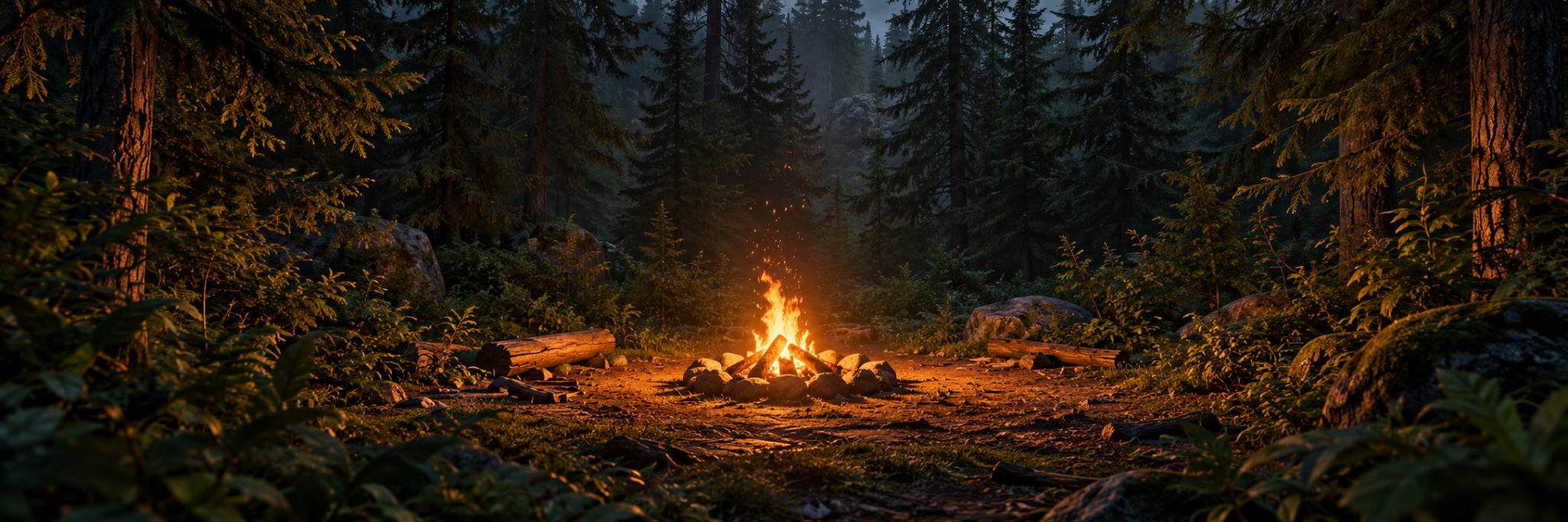
Survival in video games is a gameplay mechanic and genre in which the player's primary objective is to stay alive for as long as possible or survive long enough to achieve a specific goal. Players must manage basic needs such as hunger, thirst, health, fatigue, body temperature, oxygen, or shelter while gathering resources, overcoming environmental challenges, and adapting to constantly changing threats. Unlike crafting, which focuses on creating items, or building, which focuses on constructing structures and shaping the environment, survival places the struggle against scarcity, danger, and uncertainty at the centre of the experience.
In practice, survival transforms ordinary actions into meaningful decisions. Finding food, collecting water, gathering firewood, or reaching shelter before nightfall can be just as important as combat. Every resource becomes valuable, and poor planning can have serious consequences. Players must continually weigh risk against reward, deciding whether to explore further, conserve supplies, or retreat to safety.
Survival can function as the core foundation of a game or as a complementary mechanic within other genres. In many pure survival games, there is no traditional victory condition. Instead, survival itself becomes the goal, with success measured by adaptation, endurance, and the ability to overcome increasingly difficult circumstances.
Today, survival mechanics can be found in sandbox games, open-world adventures, simulation games, survival horror titles, multiplayer worlds, colony management games, and exploration-focused experiences. Over time, survival has evolved into one of the most influential and widely used design philosophies in modern game development.
The origins of survival mechanics can be traced back to some of the earliest computer games that challenged players to manage limited resources under difficult conditions.
One of the earliest examples was The Oregon Trail (1971, later widely distributed in 1985). Players guided a wagon party across North America while managing food supplies, health, ammunition, and equipment. Disease, starvation, accidents, and harsh conditions could kill members of the group, making it one of the first games built around the concept of survival through resource management.
During the 1980s and early 1990s, several games experimented with wilderness survival. Wilderness: A Survival Adventure (1986) attempted to simulate real-world outdoor survival, while UnReal World (1992) placed players in a harsh Iron Age Finland where hunting, fishing, gathering, crafting, shelter construction, and weather management were essential. Many historians and designers consider UnReal World one of the most important predecessors of the modern survival genre.
At the same time, survival mechanics became closely associated with horror. Alone in the Dark (1992) and later Resident Evil (1996) introduced players to limited ammunition, scarce healing resources, restricted inventory space, and constant danger. These games established the foundations of the survival horror genre, where preserving resources became as important as defeating enemies.
The genre experienced its largest growth during the early twenty-first century. Minecraft (2009–2011) introduced millions of players to survival through resource gathering, exploration, crafting, farming, combat, and shelter building within an open sandbox world. Its success demonstrated that survival mechanics could appeal far beyond traditional simulation audiences.
Shortly afterwards, DayZ (2012) transformed the genre by introducing large-scale multiplayer survival, where other players often represented a greater threat than the environment itself. This period was followed by the emergence of influential games such as Don't Starve, Rust, ARK: Survival Evolved, The Forest, Subnautica, Green Hell, Project Zomboid, SCUM, and Valheim, each exploring different interpretations of survival gameplay.
Today, survival is rarely isolated as a single mechanic. It is commonly combined with crafting, building, exploration, progression systems, automation, role-playing mechanics, and multiplayer interactions, creating some of the most complex and emergent experiences in modern gaming.
Players survive within an open world that encourages exploration, crafting, and gradual progression.
Examples:
Survival serves as the foundation for creativity, discovery, and long-term development.
The game emphasizes realism and punishes mistakes severely.
Examples:
Players must often manage hunger, thirst, fatigue, injuries, infections, nutrition, weather, and physical condition in great detail.
Resource scarcity and vulnerability are used to create fear and tension.
Examples:
The challenge lies not only in staying alive physically but also in enduring psychological pressure.
Players inhabit persistent worlds shared with others.
Examples:
Cooperation, competition, betrayal, and social interaction often become the defining survival mechanics.
Survival systems support storytelling and character development.
Examples:
The player's struggle to survive becomes closely linked to the game's narrative and emotional impact.
The environment itself serves as the primary threat.
Examples:
Success depends on adapting to hostile weather, terrain, isolation, depth, oxygen limitations, or other environmental hazards.
Survival elements enhance games that primarily belong to other genres.
Examples:
These mechanics increase immersion and strategic decision-making without defining the entire game.
(Minecraft, Valheim, ARK, Terraria)
Survival provides the starting challenge, but progression eventually expands into construction, exploration, automation, farming, and creativity. The player's growing mastery over the environment becomes a central part of the experience.
(The Long Dark, Green Hell, Project Zomboid)
Every decision matters. Weather, disease, injury, exhaustion, or poor resource management can end a playthrough. These games often emphasize realism, isolation, and consequence.
(Resident Evil, Silent Hill, Alien: Isolation)
The primary purpose of survival mechanics is to create vulnerability and suspense. Limited resources force players to think carefully about every action.
(DayZ, Rust, SCUM)
Human interaction becomes a survival tool and a survival threat. Alliances, trade, cooperation, raids, and betrayal generate stories that emerge naturally from player behaviour.
(Subnautica, Raft)
The desire to discover new locations drives progression. Exploration and survival exist in constant balance, with players venturing into increasingly dangerous areas to secure better resources and technology.
(RimWorld, Oxygen Not Included, Going Medieval)
The focus shifts from individual survival to maintaining an entire community. Players must manage food production, shelter, health, morale, and social stability for multiple characters simultaneously.
Survival appeals to some of humanity's most fundamental instincts: finding safety, securing resources, and overcoming adversity. It creates tension because basic necessities become meaningful objectives rather than background details.
A well-designed survival system:
Survival can be relaxing, strategic, challenging, or terrifying depending on the game's design. For some players, the appeal lies in building a secure home in a dangerous world. For others, it comes from enduring unforgiving conditions, mastering complex systems, or surviving against seemingly impossible odds.
What makes survival unique is its ability to create tension even during moments of quiet. A simple question such as "Do I have enough food to make it back before nightfall?" can become as exciting as any action sequence.
Survival is not a single mechanic, but an entire family of gameplay systems built around resource management, adaptation, risk assessment, and endurance.
Whether players are stranded in a frozen wilderness, trapped in a zombie apocalypse, exploring an alien ocean, surviving a hostile multiplayer world, or leading a struggling colony, survival mechanics transform basic needs into meaningful gameplay objectives.
At its best, survival makes every resource valuable, every decision important, and every additional day alive feel like an achievement. More than simply keeping a character alive, survival challenges players to overcome uncertainty, adapt to adversity, and create their own stories through the act of enduring.
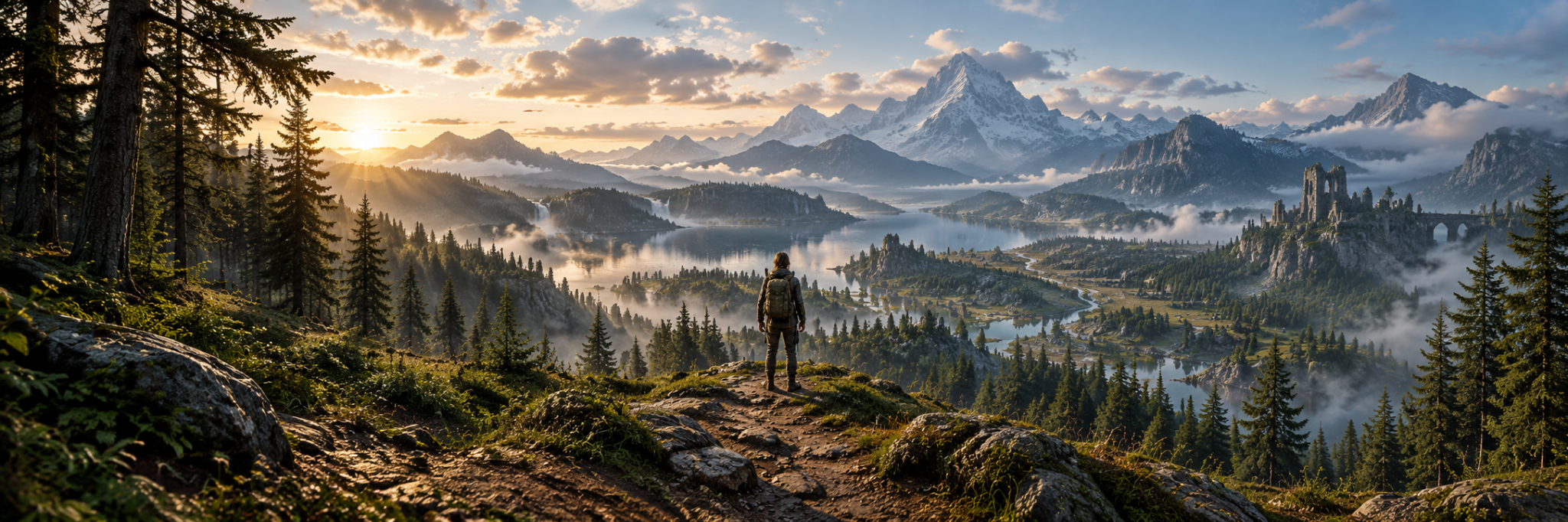
Exploration in video games is a mechanic and design philosophy that encourages players to discover the game world, investigate unknown places, find secrets, learn about the history of their surroundings, and gain knowledge of the world for themselves. It is built on curiosity, a sense of adventure, and the desire to find out what lies beyond the horizon, behind a locked door, at the end of an unmarked path, or in a place that most players may never reach.
Unlike crafting, which focuses on creating items, or building, which focuses on shaping spaces, exploration is based primarily on discovery. Players do not simply travel through the game world; they actively learn about its structure, how it works, its inhabitants, its history, and its secrets.
Exploration is one of the oldest and most universal mechanics in the history of games. It can be the main goal of the gameplay or drive other systems, such as character progression, resource gathering, crafting, the story, or combat. In many cases, the desire to see “what’s next” becomes the player’s main motivation to keep playing.
The history of exploration in games goes back to the very beginnings of the medium. One of the most important milestones was the text-based game Colossal Cave Adventure (1976), created by Will Crowther and Don Woods. Inspired by the real cave system at Mammoth Cave, it allowed players to travel through an extensive network of passages, search for treasure, solve puzzles, and make their own maps. It showed just how powerful a motivation the discovery of the unknown could be in itself.
The next step came with adventure games and RPGs in the 1980s. The Ultima series (from 1981 onwards) offered vast worlds with cities, dungeons, and the freedom to travel, while The Legend of Zelda (1986) gave players a degree of freedom to explore that had been unprecedented on consoles. Hyrule was not simply a collection of levels, but a connected world full of hidden passages, secrets, and alternative routes.
During the same period, Elite (1984) introduced an entirely new scale. Thanks to procedural generation, players could visit hundreds of star systems, making it one of the first examples of exploration on an almost unlimited scale.
The 1990s brought the transition to three-dimensional worlds. The Legend of Zelda: Ocarina of Time (1998) combined exploration with storytelling and environmental puzzles, while Tomb Raider encouraged players to search ancient ruins and find hidden passages. At the same time, the Metroid series developed the idea of a world made up of connected areas that could be unlocked by gaining new abilities.
The beginning of the 21st century brought an explosion in the popularity of open worlds. Grand Theft Auto III (2001) offered a large, connected city that players could explore with very few restrictions, while The Elder Scrolls series—particularly Morrowind (2002), Oblivion (2006), and Skyrim (2011)—made exploration one of the main pillars of gameplay. Players were rewarded for straying from the main story path and discovering the world for themselves.
The modern approach to exploration was defined by The Legend of Zelda: Breath of the Wild (2017). The game limited the number of direct hints and markers, relying instead on distinctive landmarks, the shape of the terrain, physics, and the player’s natural curiosity. A mountain, tower, or ruin visible on the horizon was reason enough to set out on a journey. This philosophy had a huge influence on later games such as Elden Ring and Tears of the Kingdom.
The player is given a large, relatively unrestricted area to explore at their own pace.
Examples:
The most important element is a sense of freedom and the ability to choose the direction of travel independently.
New abilities, tools, or powers unlock access to areas that were previously inaccessible.
Examples:
Exploration is directly connected to character progression and learning the structure of the world.
The world is generated algorithmically, so each playthrough can offer new places to discover.
Examples:
The reward is not only finding a specific place, but also experiencing a world that is never quite the same.
The world may be relatively linear, but it contains many secrets, shortcuts, collectibles, and alternative routes.
Examples:
Exploration rewards attentiveness and careful examination of the surroundings.
The main reward is learning about the story, the world, and its characters.
Examples:
Players discover the story by travelling through the world and finding information.
The environment tells its own story without the need to guide the player at every step.
Examples:
Architecture, objects, ruins, and traces of past events provide information about the world and its history.
The main reward is gaining knowledge and understanding how the world works.
Examples:
Progress comes mainly from the player’s knowledge rather than from new items.
Exploring new areas involves risk and requires players to manage their resources.
Examples:
Every expedition can lead to valuable discoveries, but it also exposes the player to danger.
(Skyrim, The Witcher 3, Elden Ring)
Exploration is dense with rewards. Behind every hill there may be a new story, dungeon, side quest, unique item, or interesting character.
(Minecraft, Valheim, Subnautica)
Exploration is essential to progression. New locations mean new resources, technologies, enemies, and opportunities for building and crafting.
(Breath of the Wild, Tears of the Kingdom, Dishonored, Prey)
The world functions like a playground full of possibilities. Players can experiment with the game’s systems and reach their objectives in many different ways.
(Uncharted, The Last of Us)
Exploration is more controlled, but still rewards attentiveness with collectibles, secrets, and additional information about the world.
(No Man’s Sky, Elite Dangerous, Microsoft Flight Simulator)
A sense of scale becomes most important. Players experience the vastness of a world they can explore almost endlessly.
Exploration appeals to one of the most fundamental human traits: curiosity. From the earliest voyages of discovery to modern space research, people have felt the need to find out what lies beyond the boundaries of the known world. Games bring this desire into an interactive environment.
Well-designed exploration:
The most memorable moments in many games are often not connected to combat or the equipment players have acquired, but to discovering a place they had never seen before, solving a mystery about the world, or finding a secret hidden from most players.
Exploration is not just a mechanic for moving around a map, but an entire design philosophy based on discovering the unknown. It can take the form of searching through ruins, travelling across open worlds, exploring the depths of the ocean, journeying between planets, or discovering for yourself the stories recorded in the surroundings.
The evolution of exploration shows how games have moved from text-based caves and hand-drawn maps to vast, complex worlds that reward curiosity and independence. At its best, exploration makes every new step a chance to discover something, while the game world itself becomes a puzzle waiting to be solved.
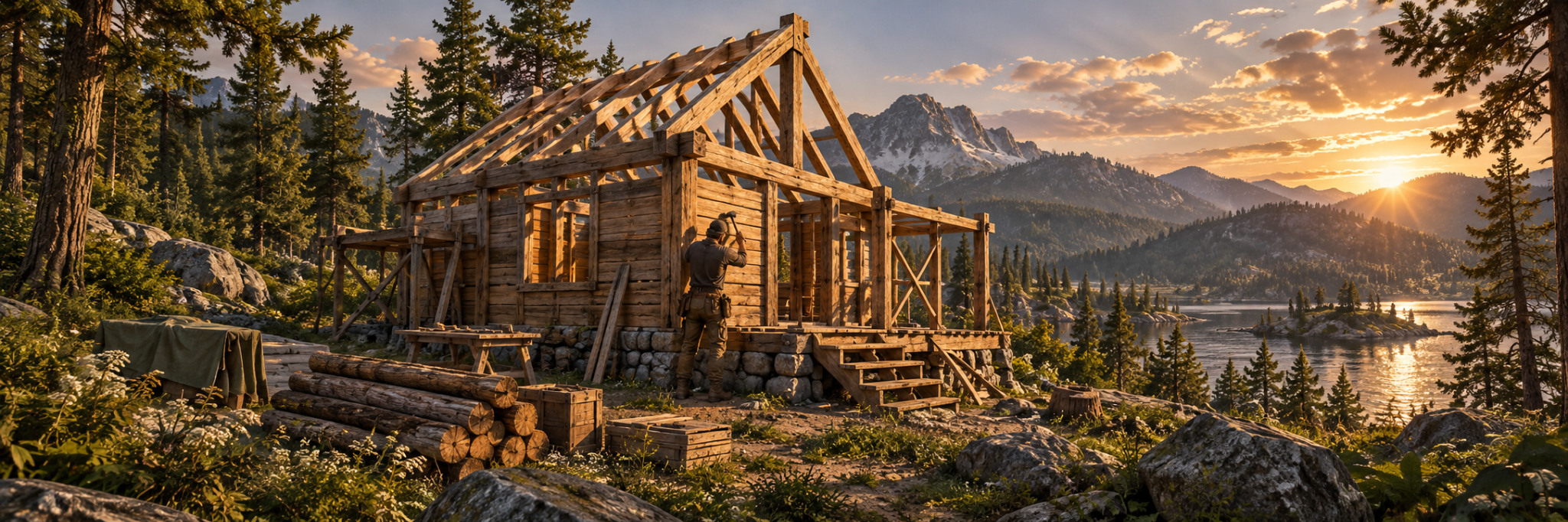
Building in video games is a mechanic that allows players to create, place, expand, and often manage structures, buildings, bases, settlements, cities, or even entire worlds by placing objects within the game environment. Unlike crafting, which mainly focuses on turning resources into items, building focuses on organising space, designing structures, and shaping the surroundings.
In practice, this means that players do not simply use a world created by the developers; they actively help shape it. They can take on the role of an architect, urban planner, engineer, military commander, or builder, designing anything from a simple shelter to complex cities, factories, and logistics systems.
The building mechanic has evolved from simple management simulations and economic strategy games into one of the most important pillars of modern game design. Today, it can be found in city-builders, real-time strategy games, sandboxes, survival games, production games, colony simulators, and even some action and battle royale games.
The roots of modern building can be traced back to the first computer management simulations. One of the earliest examples was The Sumerian Game (1964), later popularised in the form of Hamurabi, in which the player managed the resources of a developing city-state. This was not building in the modern sense, but it was an important step towards games based on planning and settlement development.
Utopia (1981/1982) for the Intellivision console is considered one of the most important predecessors of the genre. Players could develop an island by placing buildings and managing its economy and defences, foreshadowing later city-builders and economic strategy games.
The real breakthrough, however, came with the release of SimCity (1989), created by Will Wright. The game gave players an empty area of land and a set of tools for planning residential, industrial, and commercial zones, building roads and power plants, and developing urban infrastructure. Crucially, it had no traditional victory condition. The process of creating and developing a city was the main form of gameplay. SimCity established the city-builder genre and showed that building could be an end in itself.
During the 1990s and early 2000s, the mechanic developed in several directions. Games such as Caesar, Pharaoh, The Settlers, and the Anno series expanded the economic and logistical aspects. At the same time, The Sims (2000) brought building down to the scale of an individual home, allowing players to design interiors and surroundings according to their own ideas.
The next revolution came with Minecraft (2009–2011). Unlike earlier games, players were not given ready-made buildings to place. Instead, they were given individual blocks from which they could create almost anything: a house, a castle, a city, a bridge, a computer powered by redstone, or even a working logical calculation. Building became a form of digital creativity, often compared to LEGO bricks.
In the years that followed, this mechanic was combined with survival and exploration in games such as Rust, ARK: Survival Evolved, Subnautica, Valheim, Conan Exiles, and Fallout 4. A base was no longer just decoration; it became a key part of survival, production, and defence.
Game designers use several basic approaches to the building mechanic.
The player plans the development of a large urban system by placing buildings, roads, and infrastructure.
Examples:
The most important elements are the relationships between residents, the economy, transport, energy, and public services.
Building is used primarily for survival, defence, or production.
Examples:
The player constructs shelters, storage areas, workshops, and fortifications that support further gameplay.
The world is made up of individual segments or blocks that can be placed and removed freely.
Examples:
This is one of the most open-ended building systems, offering almost unlimited creative possibilities.
Structures are made from ready-made components, such as foundations, walls, roofs, doors, and stairs.
Examples:
This system offers considerable freedom while maintaining structural consistency.
Building is used primarily to create technological and logistical processes.
Examples:
In these games, the focus of design is not so much an individual building as the flow of resources, energy, and products between successive stages of production.
Aesthetics and the freedom to express personal ideas are most important.
Examples:
Players focus more on the appearance and atmosphere of the places they create than on their efficiency.
Created structures are subject to the laws of physics and must actually work.
Examples:
Building resembles technical design and requires an understanding of mechanics, aerodynamics, or how systems work.
(SimCity, Cities: Skylines, Anno)
Building takes place on a large scale. The player manages entire districts or cities, analysing the flow of people, resources, and services.
(Valheim, Rust, Subnautica, ARK)
Building is the foundation of safety and development. A base protects against threats, stores resources, and provides access to new technologies.
(Minecraft, Dreams, Minecraft Creative)
Building becomes the main means of expression. Players set their own goals and decide what they want to create.
(Age of Empires, StarCraft, Warcraft III)
Buildings are part of the economy and military operations. Their placement affects unit production, defence, and the pace of development.
(Factorio, Satisfactory, Dyson Sphere Program)
Efficiency is the most important factor. The satisfaction comes from creating increasingly optimised and efficient systems.
(The Legend of Zelda: Tears of the Kingdom, Death Stranding)
Building is a tool for solving problems, supporting exploration, or telling a story by leaving a lasting mark on the game world.
(Fortnite)
Building becomes part of fast-paced combat. Players put up walls, ramps, and towers in a matter of seconds, changing the course of a fight.
Building gives players one of the strongest forms of agency available in games. Most mechanics allow players to explore, destroy, or acquire things. Building, on the other hand, allows them to create.
A well-designed building system:
Building can be relaxing, strategic, technical, or exciting. For some players, the most important thing is creating a beautiful home; for others, it is building a perfectly functioning factory or a city with hundreds of thousands of residents.
Building is not a single mechanic, but an entire family of systems that allow players to actively shape the game world. It can take the form of planning a metropolis, building a fortress, designing a home, creating a huge factory, or constructing spacecraft. Its evolution shows how games have gradually moved from ready-made, unchanging levels to worlds that players can help shape according to their own vision.
At its best, building makes the player more than just a participant in events. They become the architect of the world in which their own story unfolds.
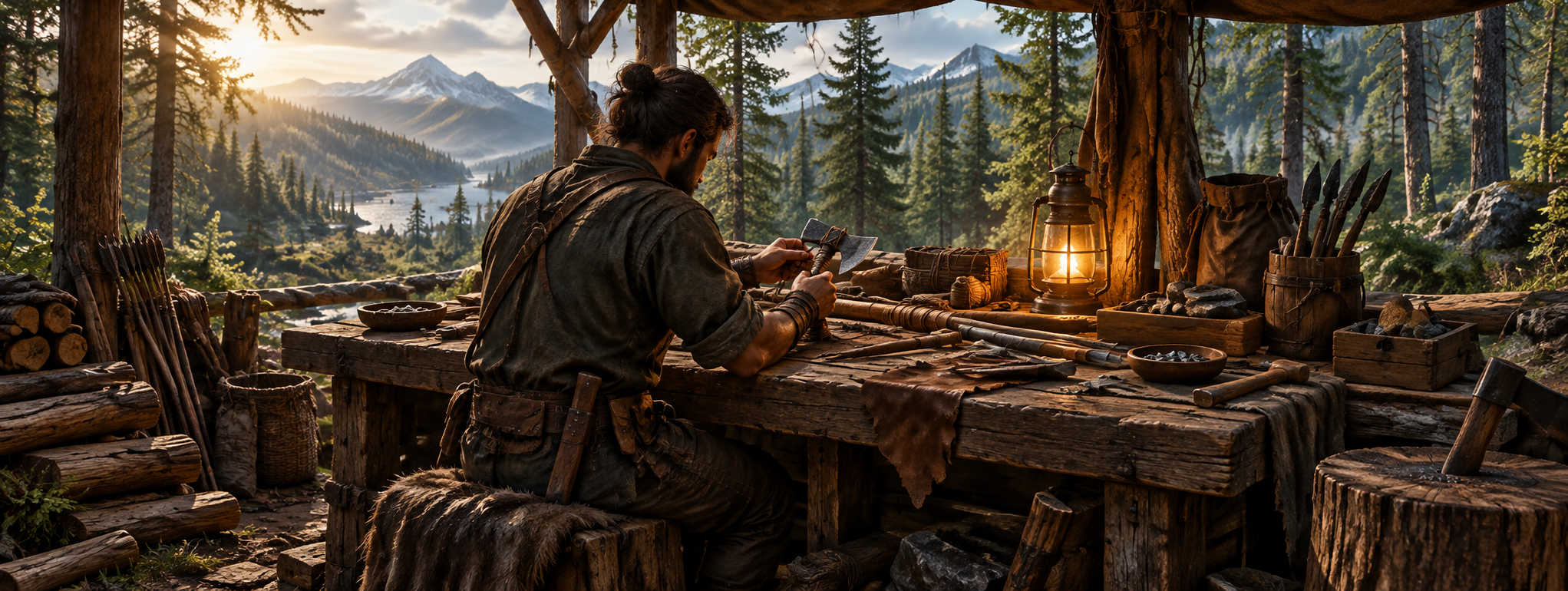
Crafting in video games is a gameplay mechanic that allows players to create new items, tools, weapons, armour, consumables, structures, machines, or other game objects by gathering and combining resources, materials, or components found throughout the game world. Unlike survival, which focuses on staying alive, or building, which focuses on creating and shaping structures, crafting is centred on transforming one set of resources into something new and useful.
In practice, crafting allows players to actively participate in their own progression rather than relying entirely on loot, quest rewards, or merchants. A piece of wood becomes a torch, ore becomes a sword, herbs become medicine, and monster parts become powerful armour. The player is not merely consuming content created by the developers but producing tools, equipment, and solutions through their own effort and knowledge.
Crafting often acts as a bridge between exploration, survival, combat, and progression. Players venture into dangerous areas to obtain rare materials, learn new recipes, unlock advanced technologies, and create equipment that enables access to increasingly challenging content. This creates a gameplay loop in which gathering, processing, creating, and improving continuously reinforce one another.
Over time, crafting evolved from a relatively uncommon feature found in role-playing and adventure games into one of the most widespread mechanics in modern game design. Today, it can be found in survival games, sandbox titles, role-playing games, MMOs, action adventures, strategy games, colony simulators, factory builders, and even shooters.
The origins of crafting can be traced back to some of the earliest computer games that allowed players to combine items or use ingredients to create new effects.
In adventure games such as King's Quest (1984), players often collected items and combined them or used them in specific ways to solve puzzles. While these systems were primarily focused on problem-solving rather than production, they introduced the fundamental idea that individual objects could be transformed into something more useful through player interaction.
A more direct precursor appeared in the Ultima series. Beginning with Ultima IV: Quest of the Avatar (1985), players gathered magical reagents such as ginseng, garlic, mandrake root, nightshade, and sulfurous ash, then combined them using the Mix command to create spells. Although largely limited to magic, this represented an early example of systematic recipe-based crafting.
Throughout the 1990s, crafting remained relatively uncommon but gradually became more sophisticated. Games increasingly experimented with alchemy, item enhancement, resource processing, and production systems. The concept was no longer limited to puzzle solutions and began emerging as a progression mechanic in its own right.
A major milestone arrived with Diablo II (2000) and its Horadric Cube, which allowed players to combine items and materials according to specific recipes. The system demonstrated how item combination could become a meaningful gameplay layer rather than a simple inventory function.
At roughly the same time, massively multiplayer games expanded crafting into an economic activity. Ultima Online (1997) and later World of Warcraft (2004) introduced professions such as blacksmithing, alchemy, engineering, tailoring, and enchanting. Players could specialise in occupations, create goods for others, and participate in player-driven economies.
The greatest transformation came with Minecraft (2009–2011). Rather than treating crafting as a secondary mechanic, Minecraft placed it at the centre of the entire gameplay experience. Resources gathered through exploration could be arranged within a crafting grid to produce tools, weapons, building materials, machines, and countless other objects. The game's enormous success popularised crafting on a global scale and helped establish the survival-crafting genre.
Alongside Minecraft, Terraria (2011) further refined the concept through extensive crafting trees, progression chains, and specialised crafting stations. Together, these games defined many of the conventions still used by modern crafting systems.
The following years saw crafting spread into countless genres through games such as The Elder Scrolls V: Skyrim, The Witcher 3, Monster Hunter, Subnautica, Valheim, Rust, Factorio, Satisfactory, and No Man's Sky. Today, crafting systems range from simple recipe-based production to vast industrial networks capable of automating entire economies.
The simplest and most common approach. Players exchange a specific quantity of materials for a predetermined item.
Examples:
The system is transparent and easy to understand, making progression predictable and accessible.
Players must first discover schematics, blueprints, formulas, or instructions before being able to create an item.
Examples:
This approach encourages exploration, questing, and treasure hunting.
Recipes are discovered through experimentation rather than being fully revealed to the player.
Examples:
Experimentation creates a sense of discovery and invention, though it can also increase complexity.
Players assemble equipment from interchangeable components that affect appearance, statistics, or functionality.
Examples:
The focus is not simply creating an item, but tailoring it to a particular playstyle.
Large numbers of components can be combined to produce hundreds or thousands of possible outcomes.
Examples:
These systems emphasise mastery, experimentation, and optimisation.
Crafting expands beyond individual items into large-scale industrial production.
Examples:
The central challenge is designing efficient production chains rather than crafting items manually.
The player performs actions that directly simulate the crafting process.
Examples:
The process itself becomes part of the gameplay experience rather than a simple menu interaction.
(Minecraft, Terraria, Valheim, Subnautica, Don't Starve)
Crafting forms the foundation of progression. Players gather resources, create better tools, unlock new possibilities, and gradually expand their capabilities. The relationship between exploration and crafting drives the entire game loop.
(Skyrim, The Witcher 3, Monster Hunter)
Crafting supports character builds and equipment progression. Potions, enchantments, armour sets, and specialised weapons allow players to customise their abilities and prepare for specific challenges.
(The Last of Us, Resident Evil, Dead Island)
Crafting is intentionally limited and tactical. Resources are scarce, forcing players to make meaningful decisions about what to create and when to use it.
(World of Warcraft, Final Fantasy XIV, Black Desert Online)
Crafting becomes a profession integrated into a larger economy. Players can specialise in production, trade goods on markets, and supply equipment to other players.
(Factorio, Satisfactory, Dyson Sphere Program)
The crafting process itself becomes the game. Efficiency, logistics, throughput, and optimisation are often more important than individual items.
(The Legend of Zelda: Tears of the Kingdom, Kerbal Space Program, Spore)
The line between crafting and building becomes blurred. Players combine components to create vehicles, machines, creatures, or entirely new solutions to problems.
Crafting gives players one of the strongest forms of agency available in games. Instead of waiting for rewards, players create their own.
A well-designed crafting system:
The mechanic is particularly satisfying because it transforms effort into visible results. Materials collected through exploration become tools, equipment, structures, machines, or technologies that directly improve the player's capabilities.
Crafting also taps into a fundamental human satisfaction: the desire to make something. Whether forging a legendary sword, brewing a potion, constructing a machine, or designing an automated factory, the player experiences the reward of creation rather than simple acquisition.
Poorly designed crafting systems can feel repetitive, amounting to little more than collecting large numbers of resources and clicking through menus. Well-designed systems, however, turn gathering, discovery, and production into compelling gameplay loops that remain engaging for dozens or even hundreds of hours.
Crafting is not a single mechanic, but an entire family of gameplay systems built around transforming resources into tools, equipment, structures, consumables, technologies, and opportunities for progression.
It may take the form of brewing potions, forging weapons, combining magical ingredients, assembling advanced machinery, managing industrial production networks, or inventing entirely new solutions through experimentation. Its evolution reflects a broader shift in game design from simply finding rewards to actively creating them.
At its best, crafting makes every resource valuable, every discovery meaningful, and every creation a reflection of the player's knowledge, preparation, and creativity. Rather than merely consuming the game world, players help shape it through the things they build, produce, and invent.